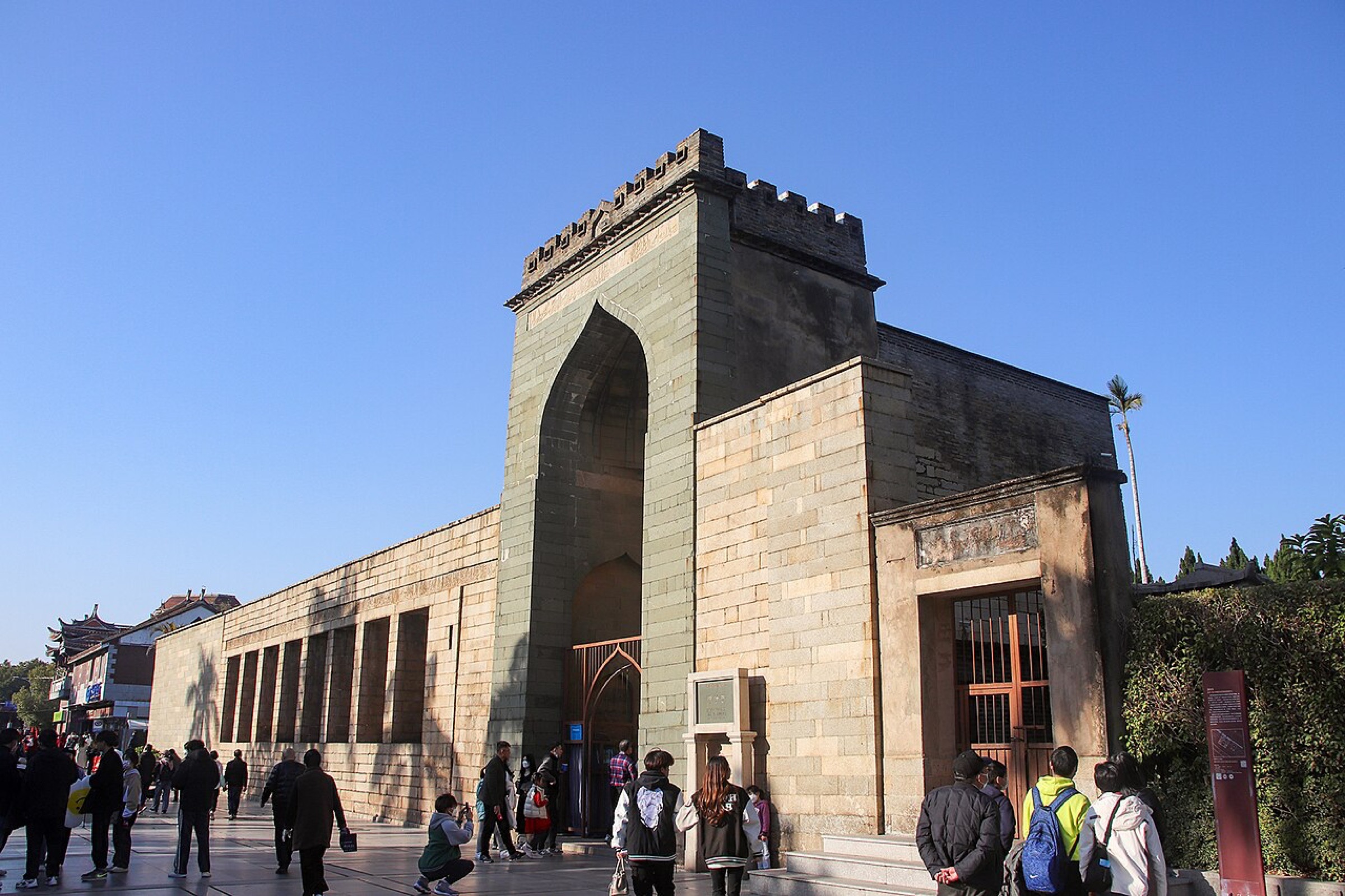
Stone gateway and courtyard of Qingjing Mosque in Quanzhou

Islamic heritage · World Heritage

Qingjing Mosque

Founded in 1009, this stone mosque is one of the clearest surviving signs of the Muslim communities that formed part of medieval Quanzhou.

Chinese name
清净寺 · Qīngjìng Sì
Founded
1009
Major repair
1310
Allow
About 30–45 minutes

Why visit

A world-port connection you can read in stone.

The mosque turns the abstract idea of international maritime trade into evidence on a city street. Its history belongs to merchants and communities from the Islamic world who lived, worshipped and became part of Quanzhou's urban life.

The official Quanzhou account dates its foundation to 1009, identifies its original name as Masjid al-Ashab and records a major repair in 1310. Within the World Heritage property, it demonstrates the port city's diverse social and religious structure.

What to notice

  • The monumental stone gate tower and its West Asian Islamic architectural language.
  • The surviving walls of the Prayer Hall and the direction of its prayer niche.
  • Mingshan Hall, the ancient well and inscribed steles connected to the mosque's history.
  • Its position on Tumen Street, near Confucian and popular-religion landmarks.

Visiting respectfully

Dress and behave with the expectations of a religious site in mind. Keep worship areas clear, avoid photographing people without permission and follow signs or staff instructions.

Plan with the information that is actually published

The official heritage pages checked on 11 July 2026 confirm the history, surviving structures and location, but do not publish a current opening schedule. Save 泉州清净寺 and 泉州市鲤城区涂门街, then confirm same-day access locally, especially around Friday prayers and religious holidays.
Evidence on site

A mosque and a cemetery reveal a community, not a brief foreign stop.

The monumental gate, Arabic foundation inscription, prayer-hall remains and later repairs show an institution sustained across several historical moments.

The 1310–1311 inscription records a rebuilding and recalls a foundation in 1009–1010. Scholars regard the earlier date as plausible, while distinguishing it from later structures such as Mingshan Hall. That layered reading is more reliable than calling every visible wall a thousand years old.

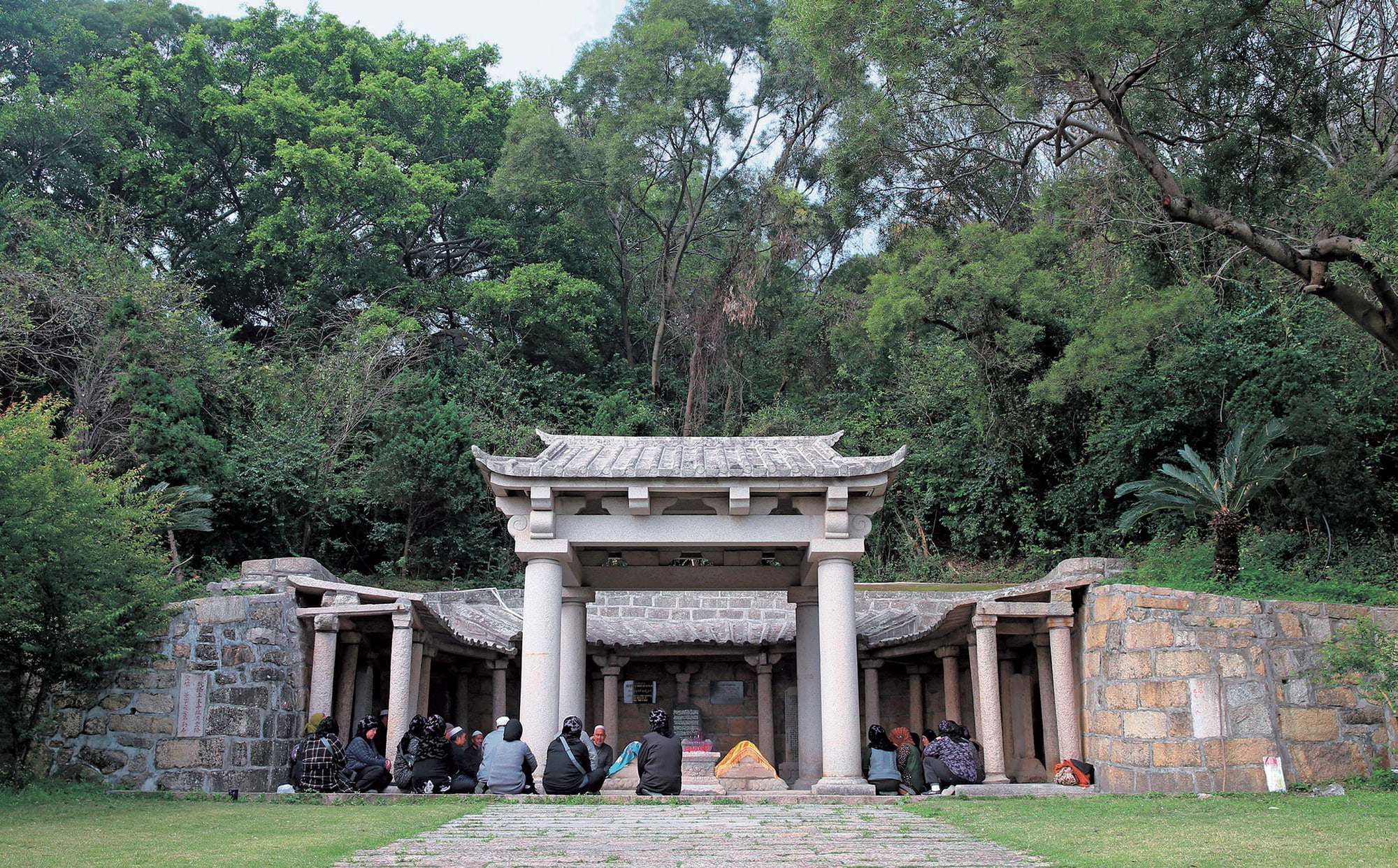
Quanzhou's Islamic tombstones and Lingshan burial landscape add another dimension. They show residence, death, family and community memory. Local tradition about companions of the Prophet remains culturally important, but it is not secure proof of a seventh-century Muslim settlement.

The Islamic Tombs on Lingshan in Quanzhou

Research lens

What scholarship adds to the visit

The mosque is strong evidence not merely of contact with the Islamic world, but of an organised community able to build, repair and sustain institutions in Quanzhou.

01

Architecture altered the city's morphology

Clark argues that Muslim and Hindu residents were participants in Quanzhou's urban culture. The mosque's monumental stone gate and position on a principal street make that community presence spatially visible.

Read the source

Hugh R. Clark, ‘Muslims and Hindus in the Culture and Morphology of Quanzhou’ (1995)

02

Diaspora became local history

Chaffee describes maritime Muslim communities as diasporas whose identities changed across generations. Qingjing should therefore be read as a community institution, not a souvenir left by transient Arab traders.

Read the source

John W. Chaffee, ‘Diasporic Identities in the Historical Development of the Maritime Muslim Communities of Song-Yuan China’ (2006)

03

The site contains several architectural moments

The Arabic inscription records the 1310–1311 rebuilding and recalls a foundation in 1009–1010, a date Leslie and Youssef regard as plausible. Later halls belong to other periods. Reading those layers prevents the misleading claim that everything visible is a thousand years old.

Read the source

Donald Daniel Leslie and Ahmad Youssef, ‘Islamic Inscriptions in Quanzhou’: A Review (1988)

Continue the story

Connect mosque, street and port belief

Islamic stone architecture in Quanzhou
Community memory

Islamic Tombs

Go beyond trade contact to the history of Muslim communities living in Quanzhou.

Explore