伊斯兰教圣墓
What changes when overseas merchants establish places to bury and remember their dead?
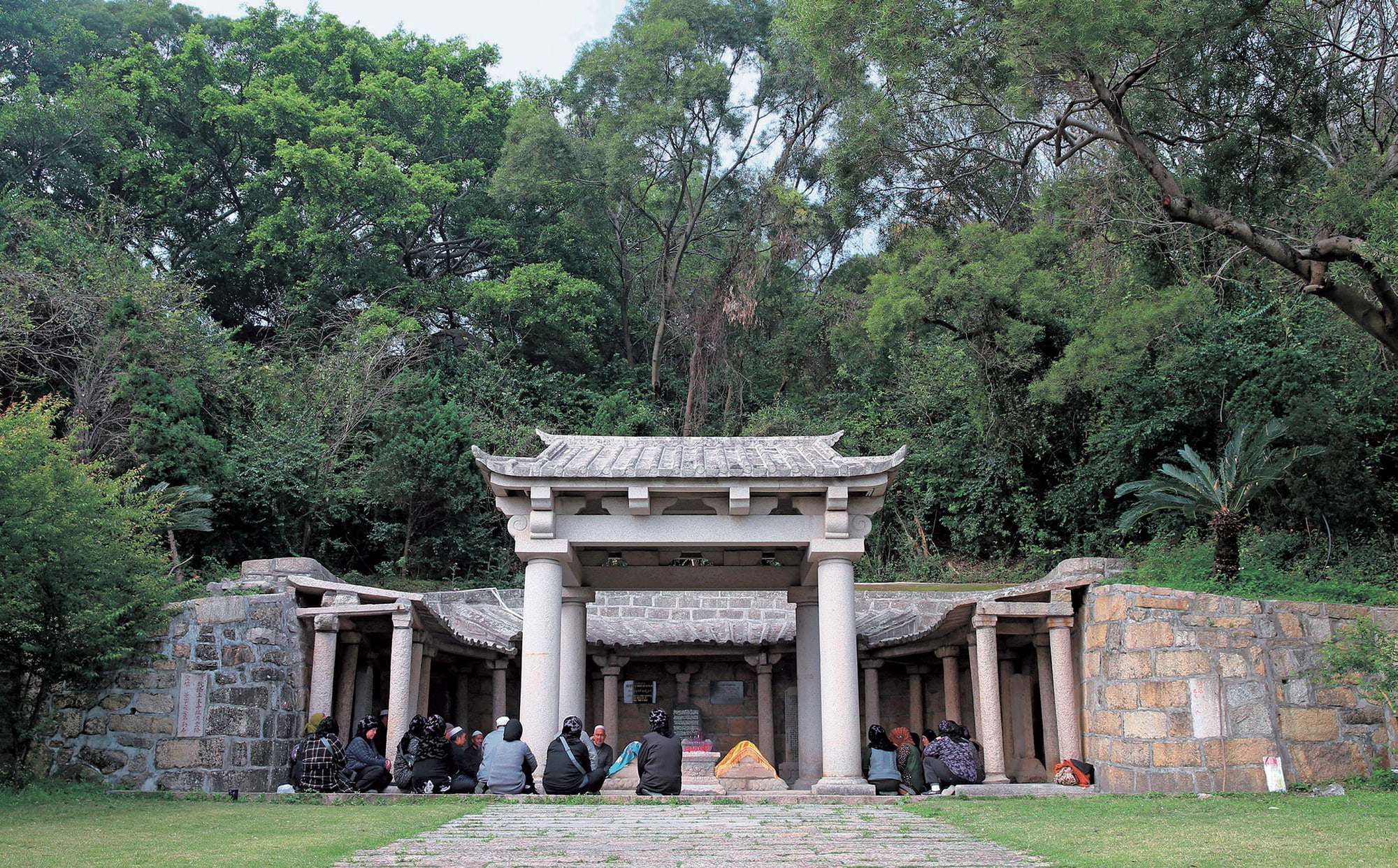
The Islamic Tombs lie on the southern slope of Lingshan, about two kilometres east of the old city. Two granite grave covers sit within a half-moon-shaped stone corridor cut into the hillside. Their alignment follows Muslim burial practice, with the graves oriented towards Mecca.
The site is traditionally associated with two Muslims believed to have arrived in the seventh century. That tradition is important to the site's devotional history, but scholars do not treat it as secure evidence that companions of the Prophet personally reached Quanzhou. A firmer chronological anchor is the Arabic inscription recording a community-funded renovation in 1322.
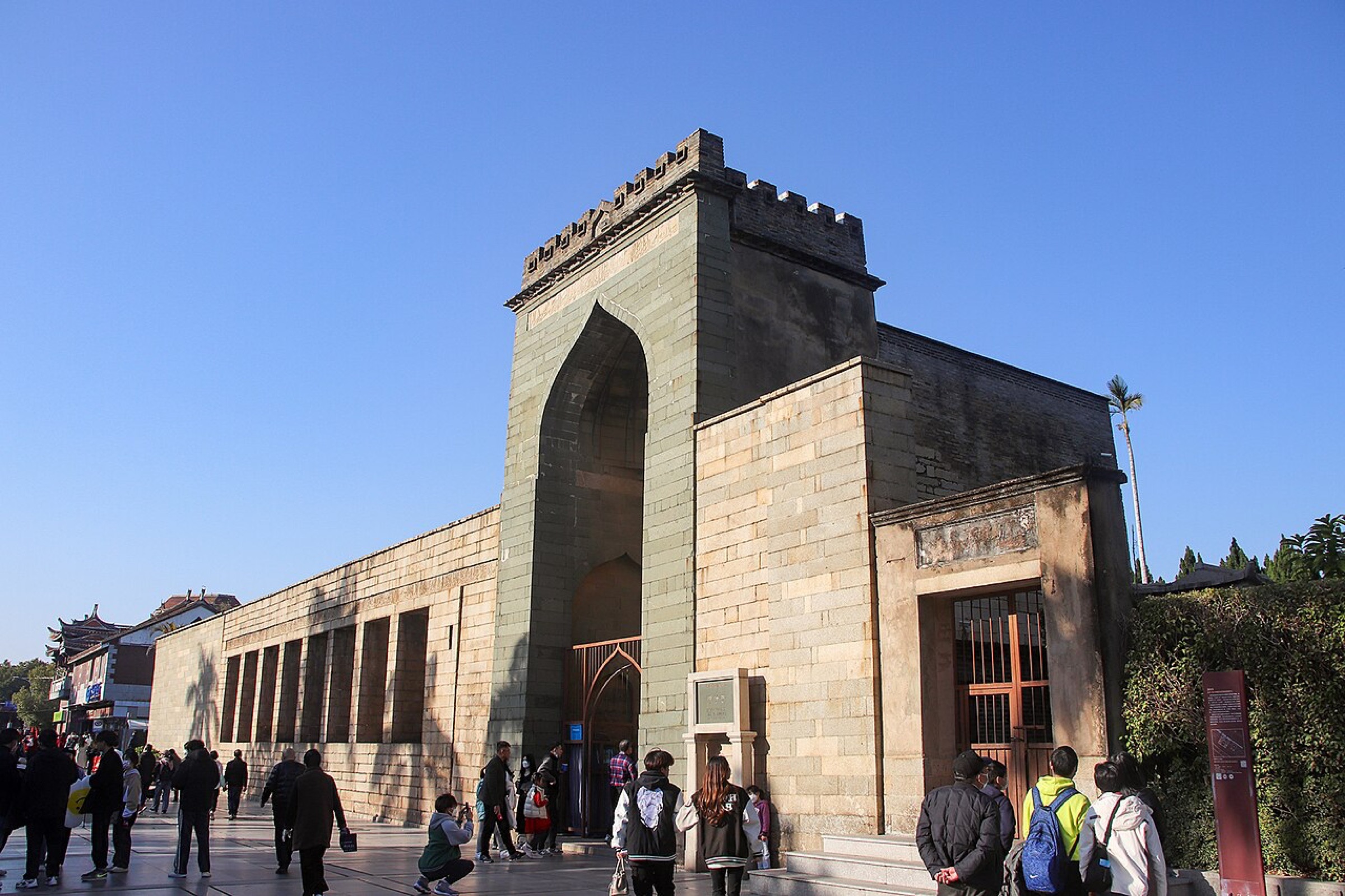
A second major inscription dates to 1417 and records that Zheng He made an incense offering here during the Ming voyages. Read together with Qingjing Mosque and the wider corpus of Arabic and Persian tombstones, the site shows institutions of worship, burial and memory sustained by a settled community rather than only transient visitors.