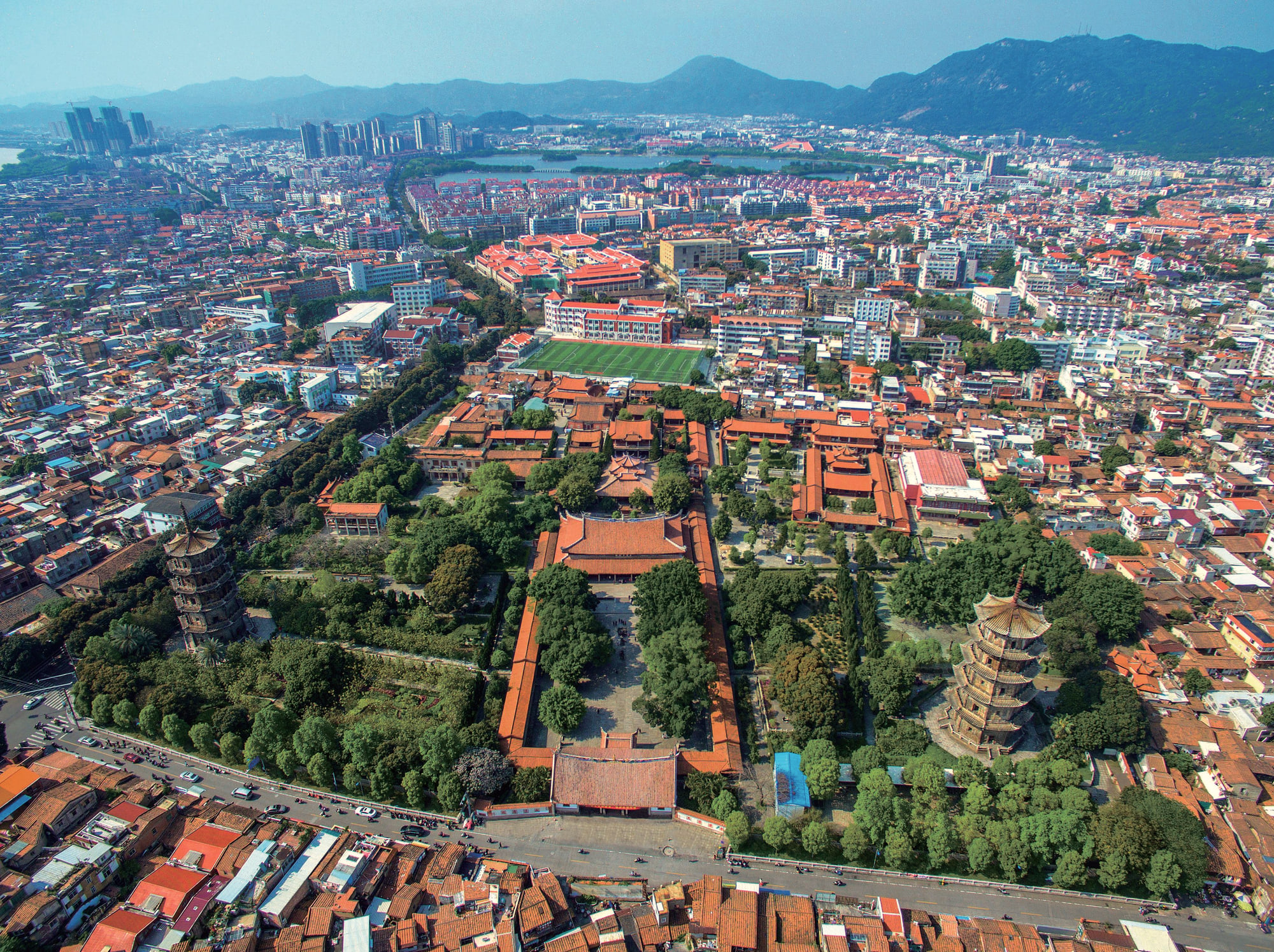
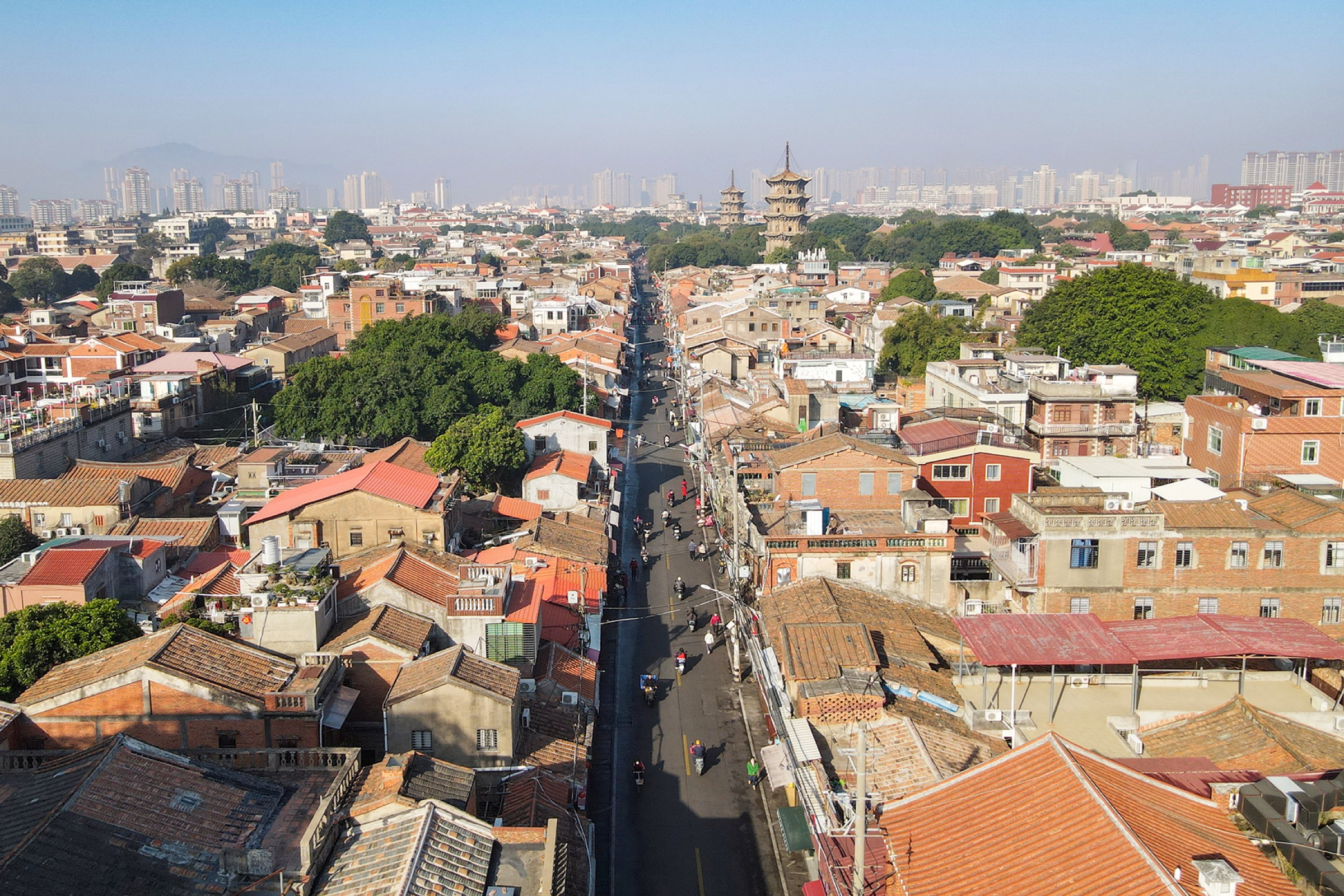
Aerial view of Kaiyuan Temple, its twin pagodas and the surrounding city

Buddhist temple · World Heritage

Kaiyuan Temple

Quanzhou's strongest first landmark: a living Buddhist complex whose courtyards, stone details and twin pagodas rise above West Street.

Chinese name
开元寺 · Kāiyuán Sì
Official hours
06:30–18:00
Reservation
No advance reservation in current guidance
Allow
About 60–90 minutes

Why visit

The city becomes visible all at once.

Kaiyuan Temple gives a first-time visitor an immediate sense of Quanzhou's depth. Monumental stone pagodas, Buddhist worship, carved architectural details and the busy old city outside the gate exist in one place.

Within the UNESCO property, the temple contributes to the religious, social and urban life of the Song–Yuan emporium. It should not be read as an isolated monument.

What to notice

  • The East and West Pagodas as city landmarks, not only temple structures.
  • The sequence of gates, courtyards and halls rather than rushing directly to one photo.
  • Stone carving and architectural details that point to the port's cultural connections.
  • The transition from sacred complex to West Street's commercial and residential life.

Temple etiquette

Keep voices low in worship areas, avoid blocking people at prayer and follow posted photography restrictions. Ceremonies and religious days can change how parts of the complex are used.

Good to know before you go

Municipal guidance published on 4 February 2024 states that no advance reservation is required and gives opening hours of 06:30–18:00. Save the Chinese destination 泉州开元寺 and the address 泉州市鲤城区西街 for maps or a taxi. The suggested 60–90 minute visit is an editorial estimate, not an official limit.
Evidence on site

The temple holds traces of a religious landscape that no longer survives intact.

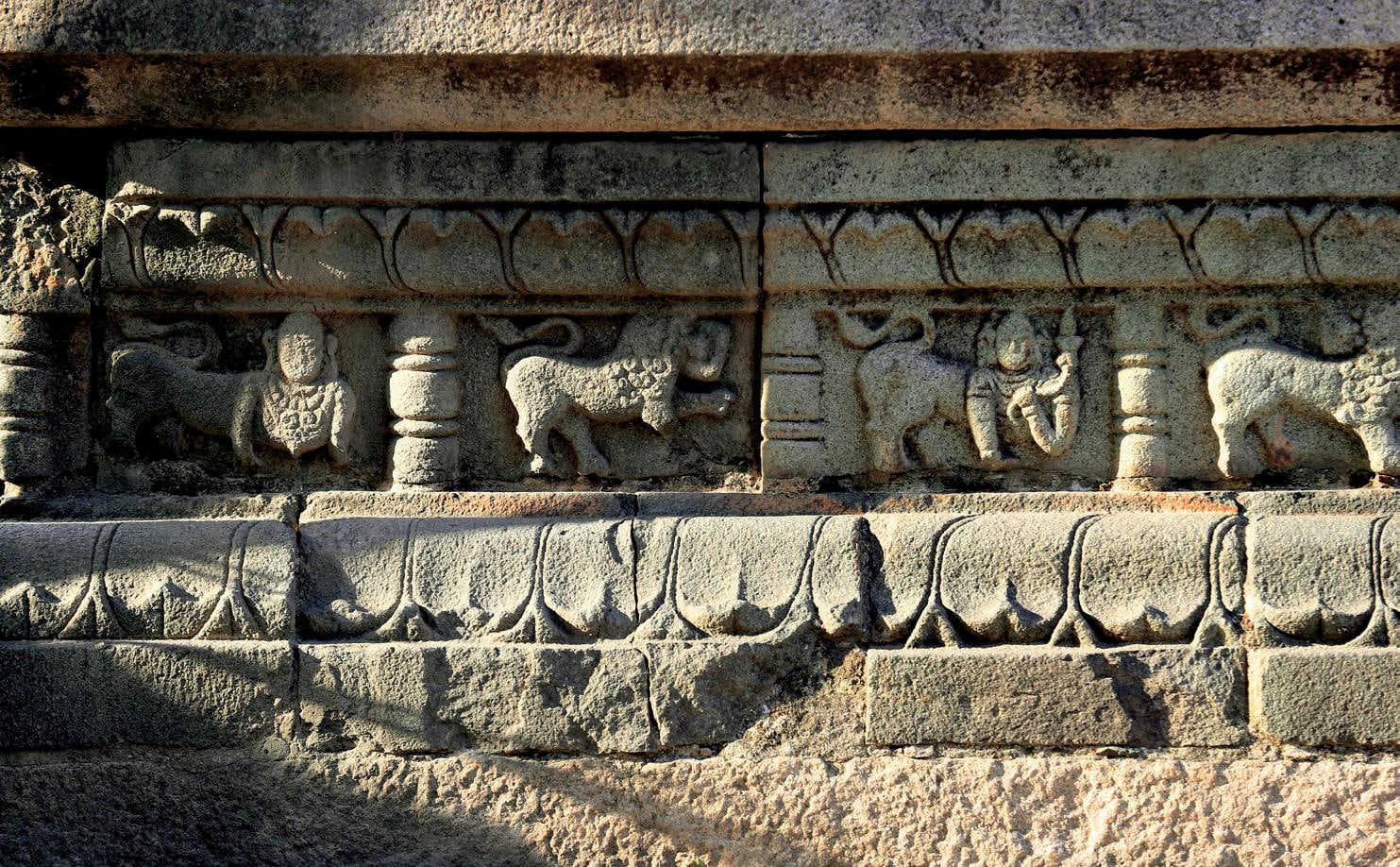
Hindu-derived stone carvings reused in the main hall connect Kaiyuan Temple to Tamil-speaking communities documented in Yuan-period Quanzhou.

The evidence needs careful wording. A bilingual Tamil–Chinese inscription dated 1281 records the installation of an image of Shiva in Quanzhou, while more than a hundred Hindu architectural fragments have been identified in the city. Their later reuse inside a Buddhist rebuilding preserves material from a lost temple or temples; it does not turn Kaiyuan itself into a former Hindu sanctuary.

The twin pagodas also belong to different building histories from the temple's Tang foundation. Reading the complex by object and date produces a more interesting story than assigning every visible feature to one golden age.

Hindu-derived stone carving reused in Kaiyuan Temple

Research lens

What scholarship adds to the visit

Kaiyuan Temple is richer than its twin-pagoda image: archaeology and reused sculpture reveal several communities and several moments of rebuilding inside one Buddhist complex.

01

A Buddhist institution shaped by port wealth

Pearson, Li and Li place the temple's architecture and material remains inside the archaeology of a prosperous trading city. Patronage and rebuilding reflect Quanzhou's changing urban economy.

Read the source

Richard Pearson, Li Min and Li Guo, ‘Quanzhou Archaeology: A Brief Review’ (2002)

02

Reused Hindu sculpture preserves a lost community

Christie's reading of the bilingual Tamil–Chinese inscription dates a Shiva image installation to 1281 and places it in Quanzhou's foreign-trader zone. The text supports a Tamil religious presence, but it does not identify a specific merchant guild as founder. Reused carvings at Kaiyuan are material afterlives of that lost landscape.

Read the source

Jan Wisseman Christie, ‘The Medieval Tamil-Language Inscriptions in Southeast Asia and China’ (1998)

03

A serial component must be read in context

ICOMOS accepted the revised nomination because the components were tied to one port-system narrative. Kaiyuan's significance is therefore not simply that it is old or beautiful, but that its fabric records patronage and cross-cultural contact in the emporium.

Read the source

ICOMOS evaluation of the revised Quanzhou nomination (2021)

Continue nearby

Build the city around the temple

West Street near Kaiyuan Temple
Outside the gate

West Street

Use the street and side lanes to understand how the temple sits inside a living neighbourhood.

Explore
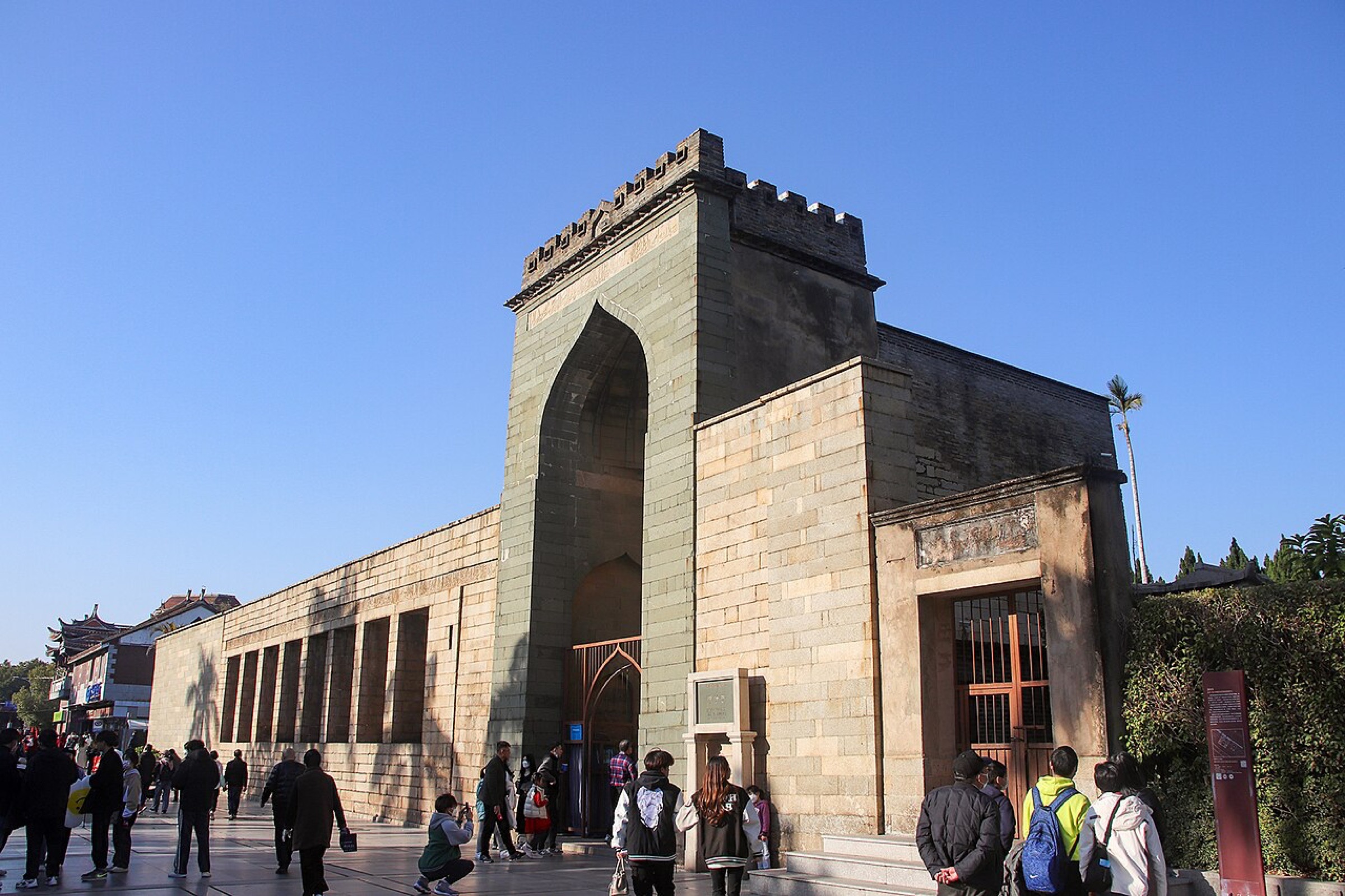
Qingjing Mosque
Cross-cultural route

Qingjing Mosque

Continue south through the old city to a very different religious landmark shaped by maritime exchange.

Explore
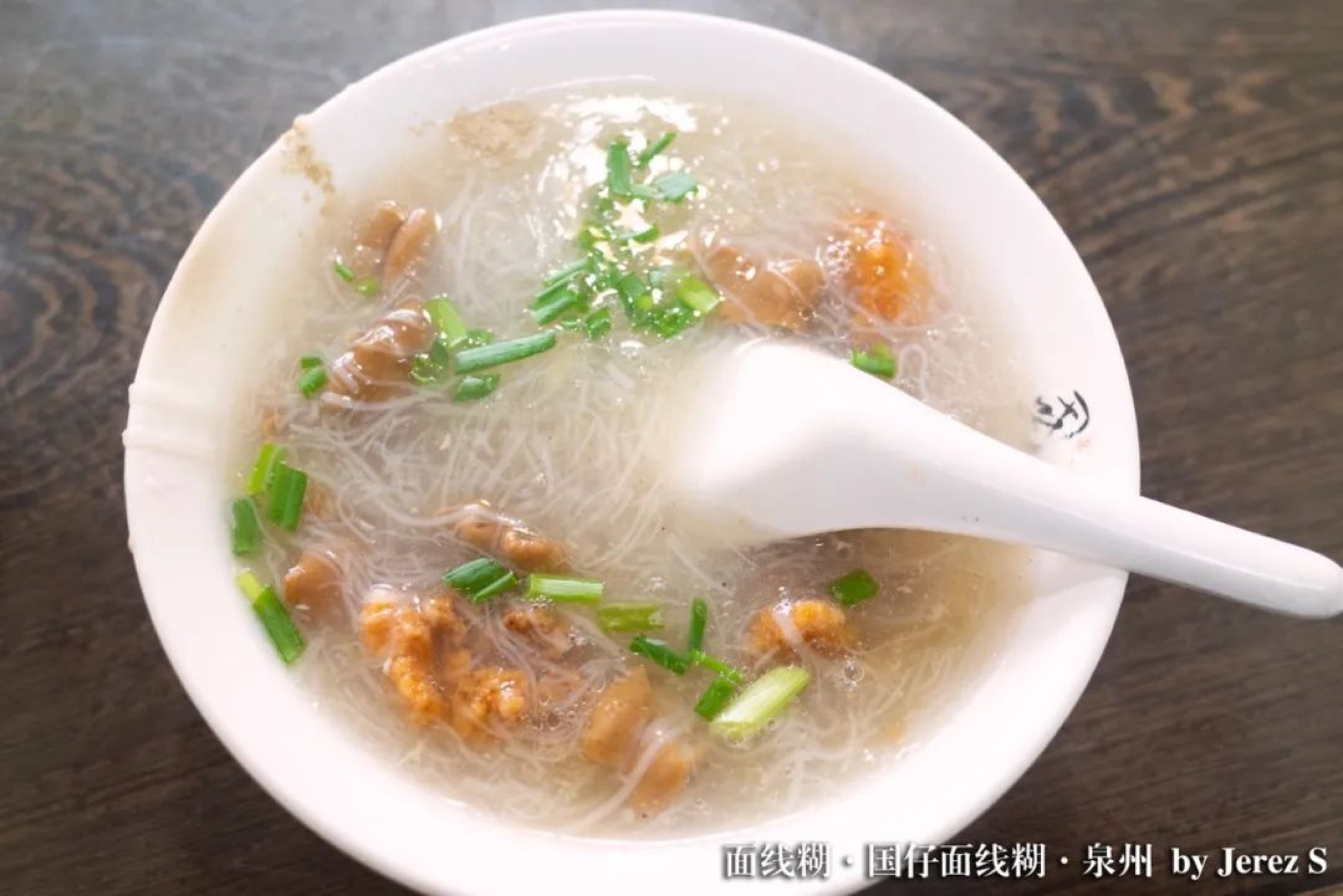
A bowl of fine vermicelli soup in Quanzhou
Breakfast

Mianxianhu

A warm bowl of fine vermicelli soup makes a practical start before the temple and street walk.

Explore