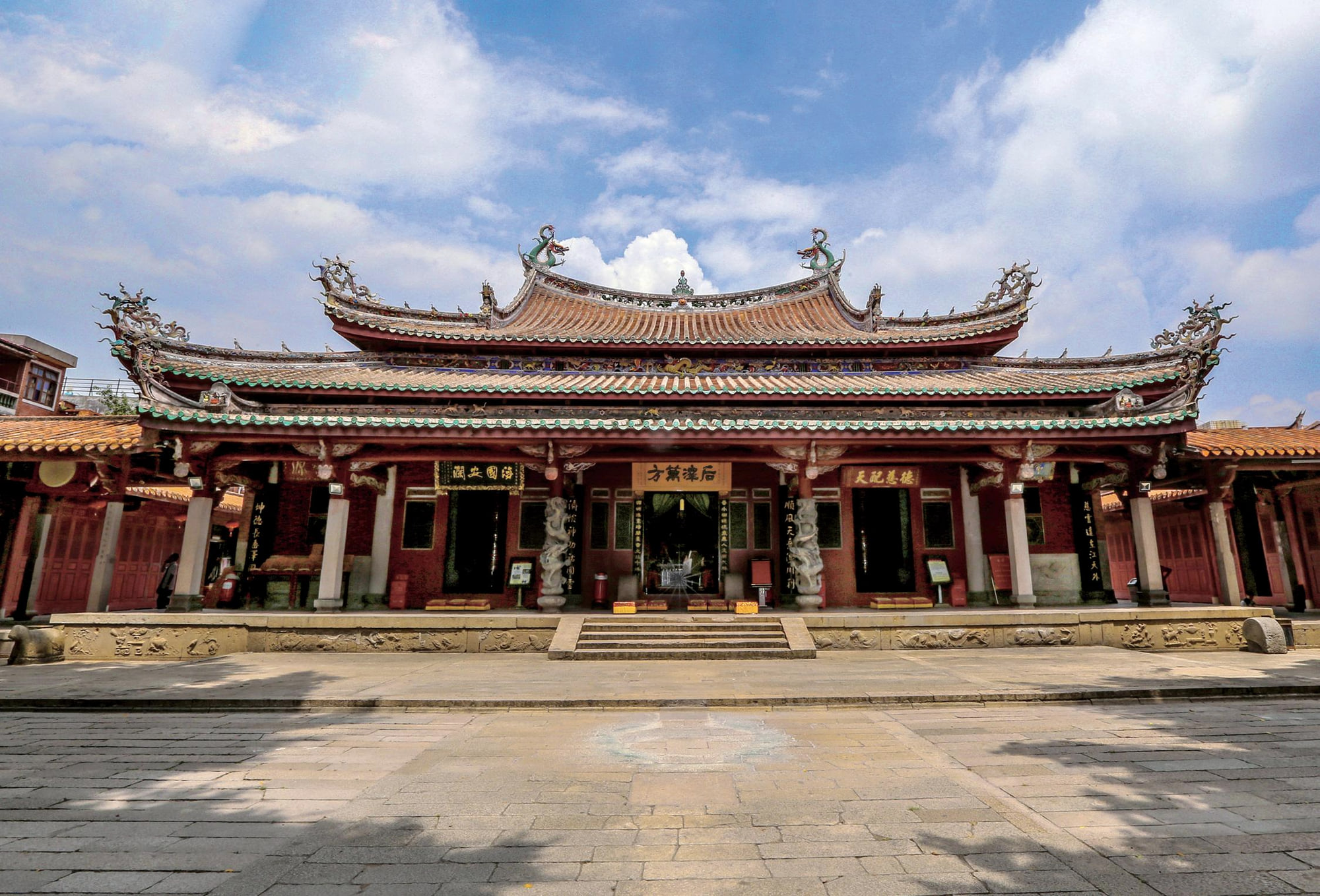
The main ceremonial hall of Quanzhou Confucius Temple and School

Education and civic order · Historic Downtown

Confucius Temple and School

The city's maritime wealth supported not only trade and worship, but also formal education, ritual and public administration.

Chinese map name
泉州府文庙 Quanzhou Confucius Temple
Role in the port
Civic education and Confucian ritual
Historic period
Moved to this site in 976-983; rebuilt from 1137
Time on site
Allow 60-90 minutes

泉州府文庙及学宫

Who educated and governed the Chinese city behind the international port?

Quanzhou's Confucius Temple and School is both a ritual complex dedicated to Confucius and the site of the prefecture's highest official educational institution. The temple moved to its present location in the late tenth century and was rebuilt in 1137 with a characteristic arrangement: the school to the east and the temple to the west.

International accounts of Quanzhou often focus on foreign merchants and imported religions. This complex supplies the necessary counterweight. The port was also a Chinese administrative city shaped by examinations, classical learning, ritual hierarchy and a locally educated elite. Officials and scholars helped manage the institutions that made large-scale trade possible.

This is not Confucius's birthplace or burial place; those are in Qufu, northern China. Quanzhou's complex is a local temple-school. Its significance lies in showing how Confucian education was embedded in a prosperous southern port and adapted through Southern Fujian architecture.
On site

What to look for

The site becomes more legible when you know which physical clues carry its larger story.

Start with the whole setting, then move closer. Architecture, archaeology and landscape often reveal different parts of the same argument.

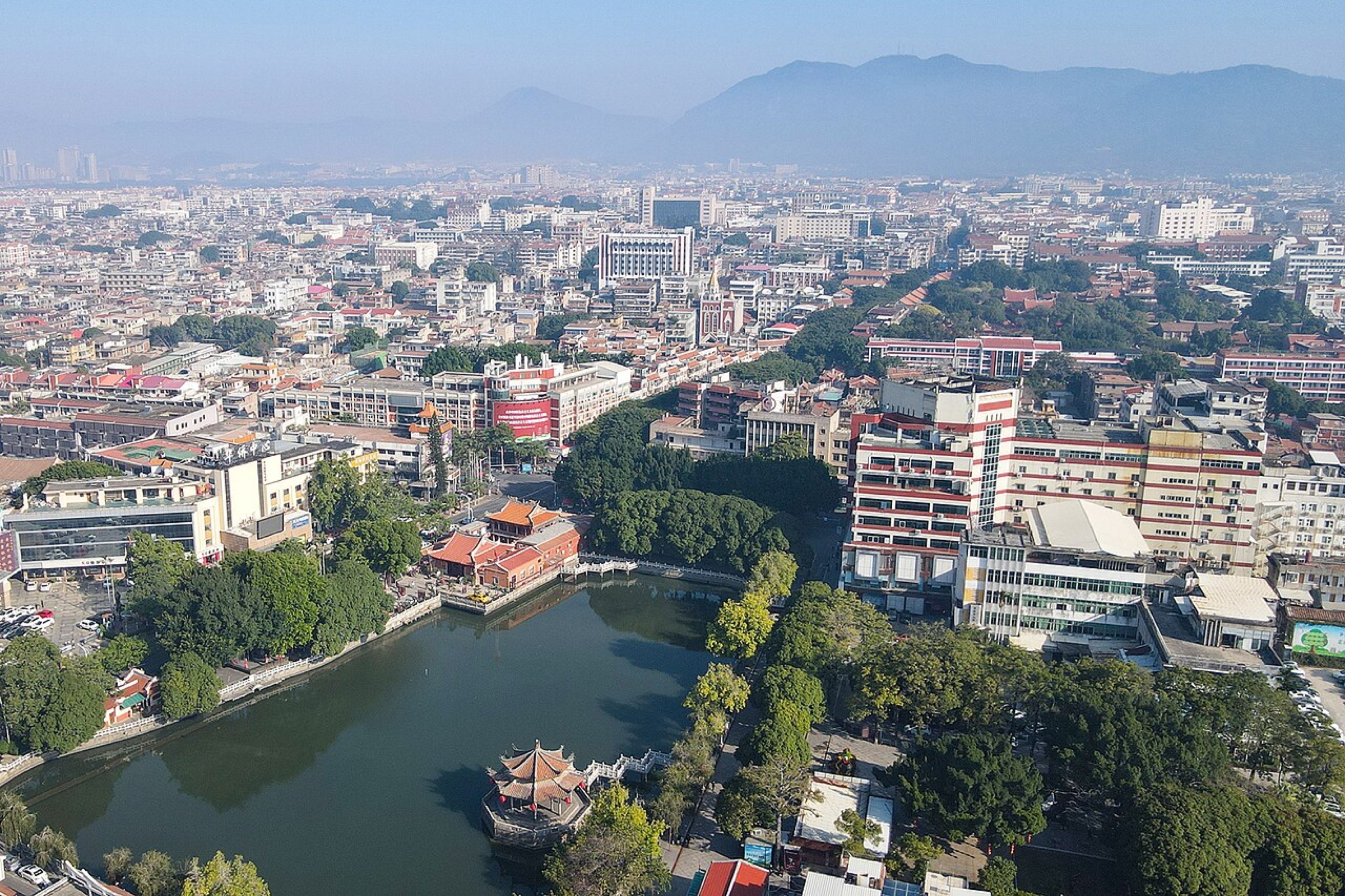
Historic streets around Quanzhou's civic and religious core

01

Temple and school as one institution

Compare the ceremonial western axis with the educational eastern axis. The layout makes worship, moral authority and formal learning part of the same civic system.

02

Dacheng Hall

The main hall uses a high-status double-eaved hipped roof, yellow glazed tiles and carved stone columns. Its scale is a reminder that this was a prefectural institution, not a small neighbourhood shrine.

03

Pan Pond and stone bridge

The half-moon pond and bridge form part of the ritual approach. Slow down here: the sequence of water, courtyard and hall is as important as individual decoration.

04

Ritual objects and later layers

The complex preserves Qing-period ceremonial vessels, musical instruments and dance implements, alongside architecture repaired across many dynasties. Displays may vary with current access.

The main ceremonial hall of Quanzhou Confucius Temple and School

Read the port system

Global commerce rested inside a recognisably Chinese civic order

The Confucius Temple and School represents the officials and educated elites who shaped local governance. They are part of the World Heritage story because a major emporium required law, records, taxation, education and public legitimacy as much as docks and ships.

Placed on a downtown route with Qingjing Mosque and Tianhou Temple, the complex also prevents a misleading binary between 'Chinese' and 'foreign' Quanzhou. The city accommodated overseas communities while remaining anchored in institutions that linked it to the wider imperial state.

See all 22 component sites

Research lens

What scholarship adds to the visit

The temple-school explains the civic order behind the emporium: education, ritual authority and trained officials were part of the same urban system as docks and markets.

01

A port city still required a governing culture

The nomination uses the paired temple and school to represent local administration, Confucian learning and the formation of an educated elite within a commercially international city.

Read the source

Quanzhou World Heritage nomination dossier (2020)

02

Local elites connected state and region

Clark's long history of southern Fujian shows how kinship, education and officeholding created networks capable of organising resources and linking the region to wider political and commercial systems.

Read the source

Hugh R. Clark, Community, Trade, and Networks: Southern Fujian Province from the Third to the Thirteenth Century

03

Cosmopolitan does not mean culturally unstructured

Research on Quanzhou works best when it avoids a simple Chinese-versus-foreign contrast. The temple-school and nearby mosque belonged to different institutions operating within the same city.

Read the source

Angela Schottenhammer, ed., The Emporium of the World: Maritime Quanzhou, 1000–1400

Plan the visit

Make the time on site count

These are planning decisions, not fixed opening-hour claims. Recheck access and transport shortly before travel.

01

Enter with the plan in mind

Before focusing on roof ornament, identify the temple axis, school axis, pond and main hall. The spatial organisation carries the central argument of the site.

02

Give the complex more than a photo stop

Allow time for courtyards, inscriptions and any open exhibitions. The site becomes richer when treated as an institution rather than only a colourful facade.

03

Use both Chinese names in searches

泉州府文庙 usually finds the visitor site. The UNESCO component is also described as 泉州文庙及学宫, emphasising the temple-and-school combination.

04

Check access on event days

Ceremonies, performances, conservation work and holiday management can alter which halls or courtyards are open. Confirm current arrangements locally.

Connect the place

Use Tumen Street to compare institutions

Walk from the Confucius Temple east towards Qingjing Mosque and the active Guan Yue Temple area, or south towards Tianhou Temple and Deji Gate. A short distance brings very different forms of authority and belief into view.