
草庵摩尼光佛造像
How did a once-global religion survive here in a form found nowhere else?
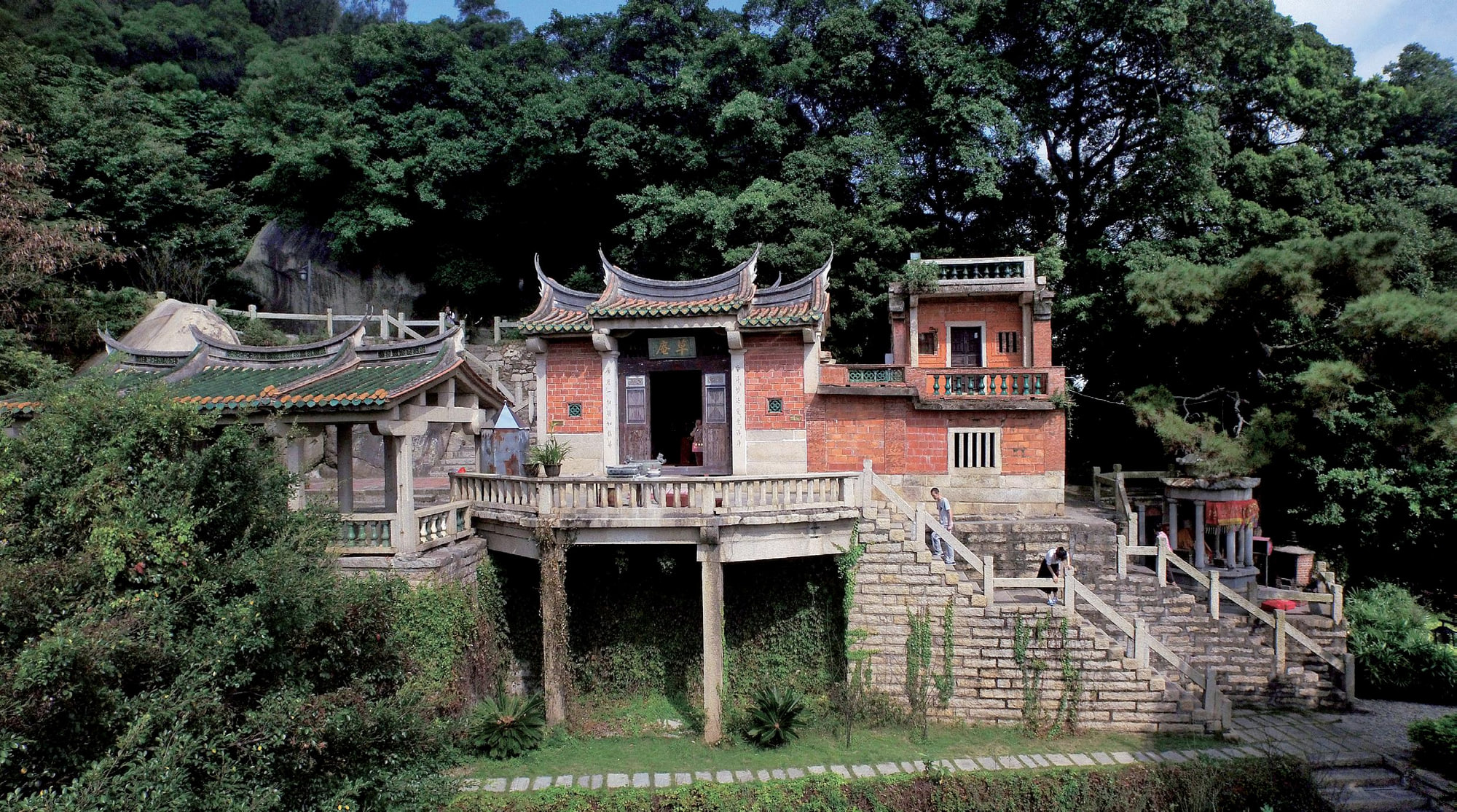
Cao'an Temple preserves the world's only known surviving stone statue of Mani, founder of Manichaeism. Mani developed the religion in third-century Mesopotamia, and its communities later spread across the Roman world, Central Asia and China. Most of its institutions disappeared; at Cao'an, a material trace survived in a small temple on Huabiao Mountain.
The site began as a thatched sanctuary during the Southern Song period, between 1131 and 1162. In 1339, donors funded the stone image and a stone chamber. The statue presents Mani in a form that would have been legible in China: seated on a lotus-like base, wearing a broad robe and surrounded by rays of light.
That visual adaptation is the point. Manichaeism did not arrive as a sealed foreign package. In China it became known as Mingjiao, the Religion of Light, and borrowed language and imagery familiar from Buddhist and Daoist settings. Cao'an makes cross-cultural exchange visible at the level of worship, not only trade goods.