
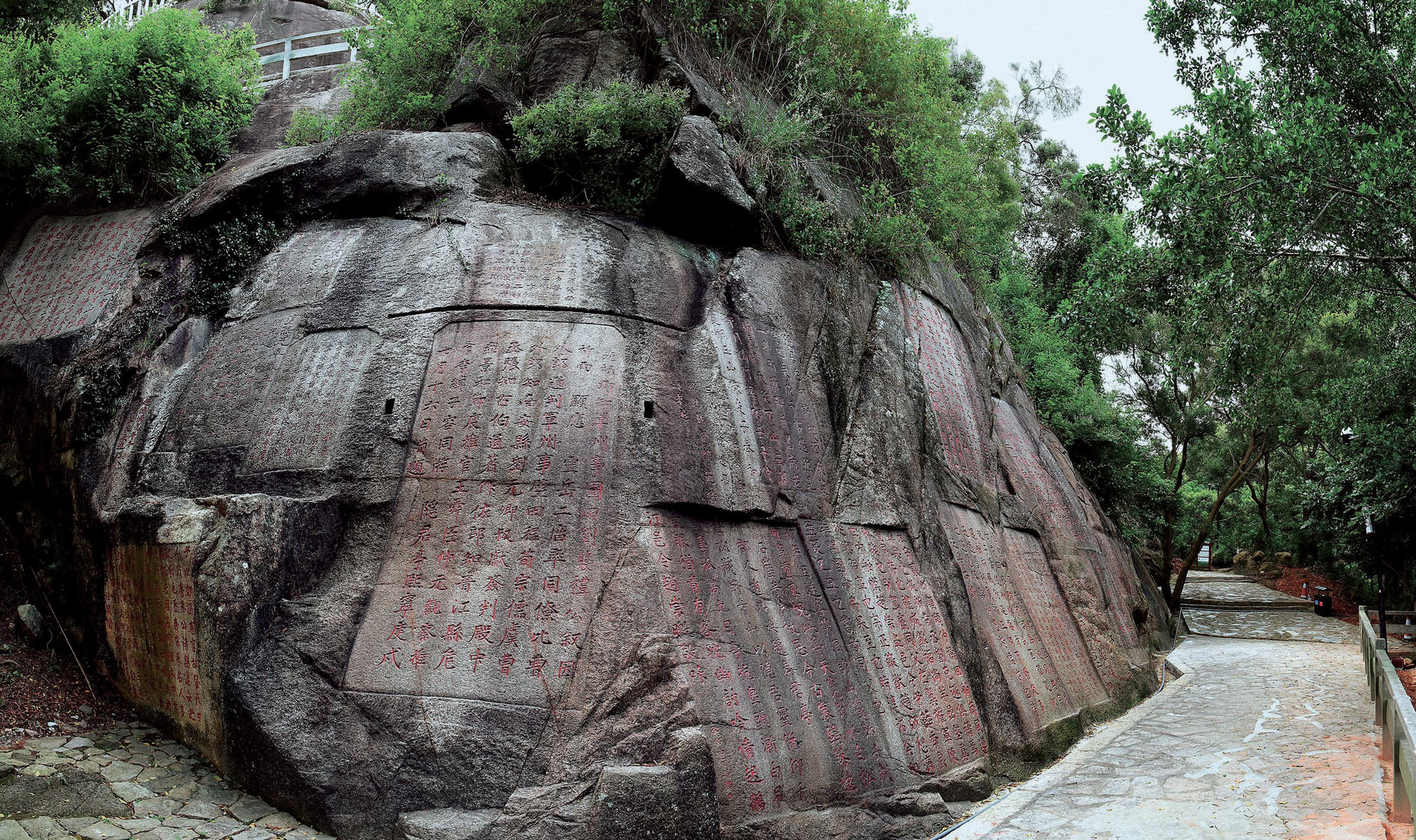
九日山祈风石刻
How did a sailing city organise uncertainty before a ship left port?
Jiuri Mountain stands beside the Jin River northwest of Quanzhou. Among its 78 surviving inscriptions are ten Song-dynasty records of ceremonies held between 1174 and 1266 to request favourable winds for maritime voyages. Six concern winter departures, three summer returns and one records both seasons.
Those dates make the site more than a scenic place associated with seafarers. The inscriptions identify maritime-trade commissioners, civil and military officials, and members of the imperial clan. They document public acts carried out by named people at moments tied to the monsoon cycle on which long-distance sailing depended.
For a visitor, the reward comes from reading rock, route and river together. The texts are dispersed across the eastern and western peaks rather than arranged like exhibits in a museum. Their setting explains why the mountain could serve as a ritual landmark, while the inscriptions preserve the administrative world behind the ceremony.