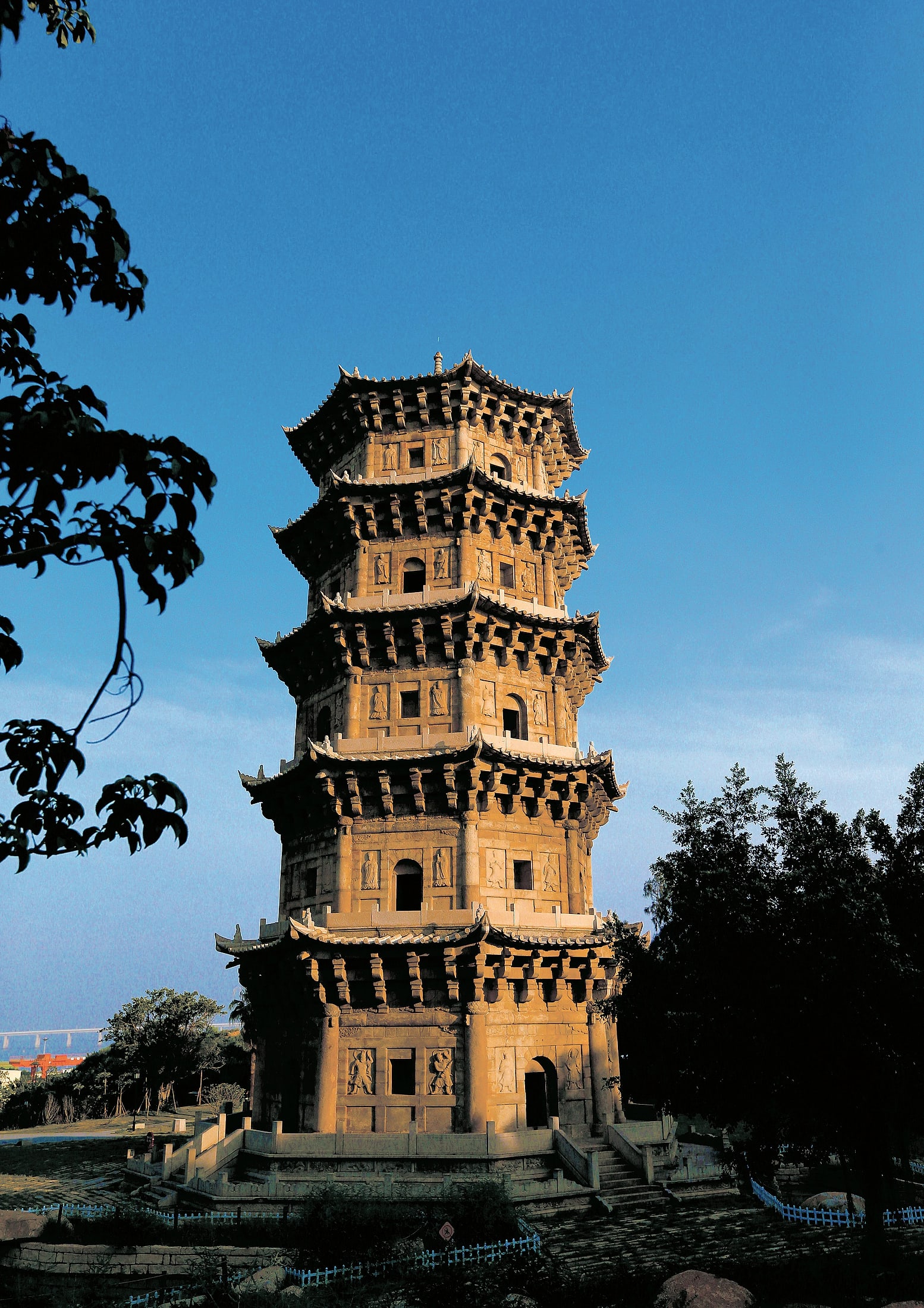
The five-storey stone Liusheng Pagoda on the Shishi coast

Navigation landmark · Shishi coast

Liusheng Pagoda

A 36-metre granite pagoda marked the point where incoming ships altered course towards Quanzhou's inner ports.

Chinese map name
六胜塔 Liusheng Pagoda
Role in the port
Visual landmark on the main shipping approach
Historic period
Earlier tower 1111–1118; present pagoda 1336–1339
Time on site
Allow 45–60 minutes

六胜塔

How could a religious tower help ships read the entrance to a port?

Liusheng Pagoda rises on Jinchai Hill at the northern tip of Shihu Peninsula, close to the main Daiyumen shipping channel through Quanzhou Bay. Ships approaching the inner ports used this point to change course, making the hill a strategically visible marker.

An earlier pagoda was funded between 1111 and 1118 by two monks and a lay benefactor. The five-storey octagonal granite tower standing today was rebuilt from 1336 to 1339 by maritime merchant Ling Huifu. Keeping those two dates separate reveals both continuity of the landmark and a specific Yuan-era act of commercial patronage.

At 36 metres high, the stone tower imitates a timber pavilion form. It served as a navigational landmark through visibility rather than as a modern lighthouse with an optical beacon. Its heritage value depends on sightlines across hill, channel and bay as much as on carved masonry.
On site

What to look for

The site becomes more legible when you know which physical clues carry its larger story.

Start with the whole setting, then move closer. Architecture, archaeology and landscape often reveal different parts of the same argument.

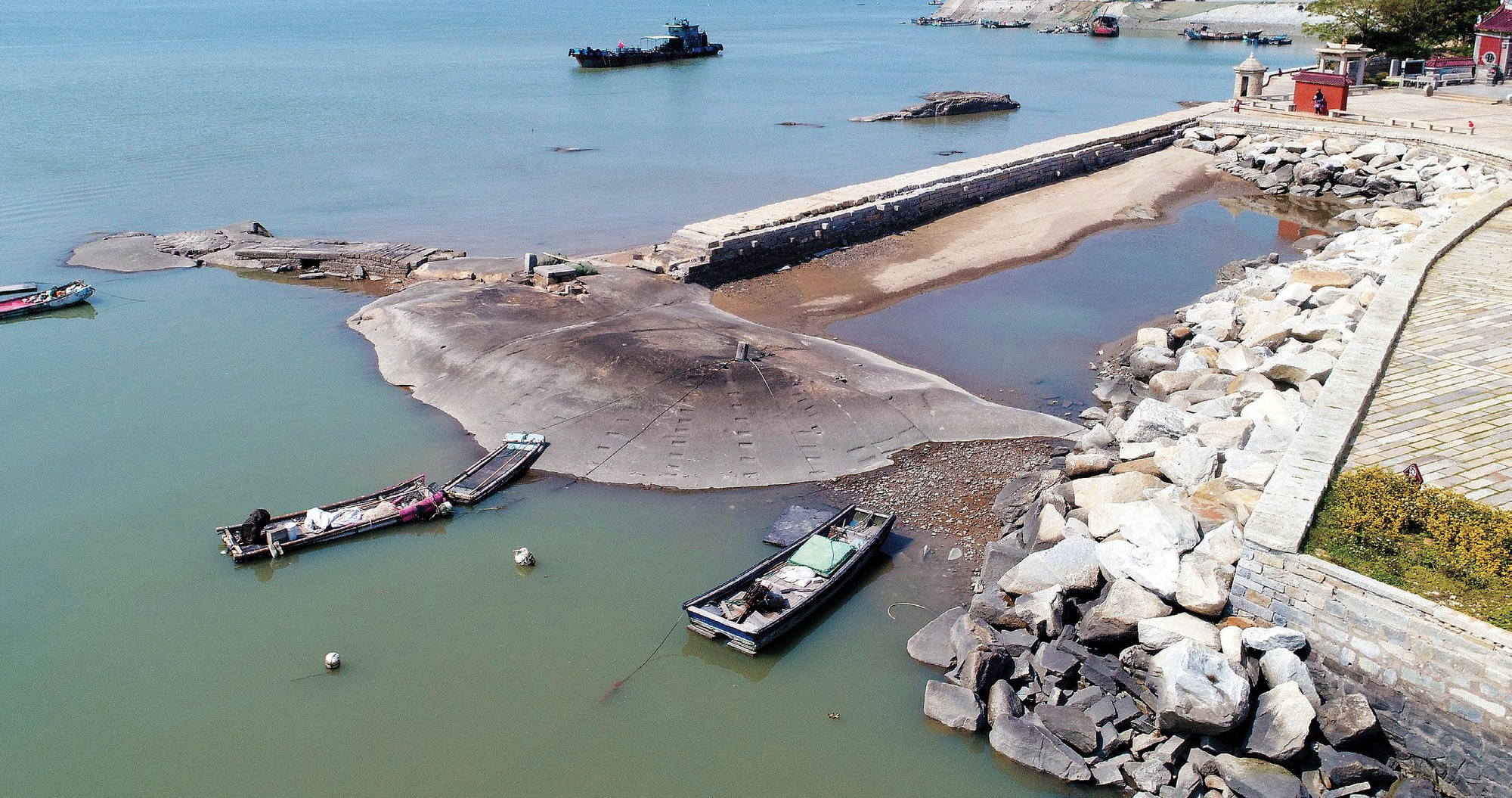
Historic Shihu Dock below Liusheng Pagoda on the Quanzhou Bay route

01

Five storeys cut in granite

Stone brackets, eaves and pavilion details translate timber architecture into durable masonry. Look for repetition and subtle changes as the tower rises.

02

The Daiyumen channel

Find the gap between Shihu Peninsula and the offshore islets. Historical records identify this as the route ships used to enter the bay.

03

Merchant-funded rebuilding

The standing tower embodies Ling Huifu's 14th-century patronage. Maritime wealth was invested in a monument that served religious, civic and practical visibility.

04

Sightlines before close detail

Step back far enough to see tower, hill and coast together. The landmark function disappears if the visit is reduced to carvings at the base.

The five-storey stone Liusheng Pagoda on the Shishi coast

Read the port system

Navigation relied on remembered landscapes before electronic charts

Liusheng was one visible point in a sequence: ships passed the bay entrance, altered course near Shihu, used the outer dock and continued towards inner river ports. The tower helped make that route legible from water.

Its setting is therefore an essential heritage attribute. ICOMOS emphasises protecting views and relationships around the coastal pagodas because a landmark separated from its historical line of sight loses part of its meaning.

See all 22 component sites

Research lens

What scholarship adds to the visit

Liusheng Pagoda joined religious patronage to navigational visibility at the point where ships altered course from Quanzhou Bay towards inner ports.

01

The present pagoda records merchant patronage

An earlier pagoda was founded in 1111–1118; the granite structure standing today was rebuilt in 1336–1339 with support from maritime merchant Ling Huifu. The distinction reveals both continuity and a specific Yuan-era investment.

Read the source

Quanzhou World Heritage nomination dossier (2020)

02

A landmark belongs to a route, not a single point

Pearson, Li and Li's regional archaeology encourages readers to connect Liusheng with the Daiyumen shipping channel, Shihu Dock and the river ports beyond it.

Read the source

Richard Pearson, Li Min and Li Guo, ‘Quanzhou Archaeology: A Brief Review’ (2002)

03

Sightlines are heritage attributes

ICOMOS emphasises the setting of the two coastal pagodas. Their role is weakened if modern development obscures the relationship between tower, hill, bay and historic shipping approaches.

Read the source

ICOMOS evaluation of the revised Quanzhou nomination (2021)

Plan the visit

Make the time on site count

These are planning decisions, not fixed opening-hour claims. Recheck access and transport shortly before travel.

01

Begin with the bay view

Use an orientation map before approaching the tower. Knowing the channel and Shihu Dock positions turns the panorama into evidence.

02

Do not call it a lighthouse

‘Navigational landmark’ is the accurate phrase. The pagoda was visible to sailors but did not operate as a modern light station.

03

Prepare for exposed weather

The hill can be windy and hot. Carry sun protection and avoid exposed viewpoints during severe coastal weather.

04

Pair it with Shihu Dock

Use a car and save both 六胜塔 and 石湖码头. The short thematic connection matters more than adding an unrelated downtown stop.

Connect the place

Read landmark and landing as one port

Start at Liusheng Pagoda to understand the shipping channel, then continue to Shihu Dock to see how vessels and cargo met the shore.