老君岩造像
Why place a giant image of a Chinese philosopher above a cosmopolitan port?
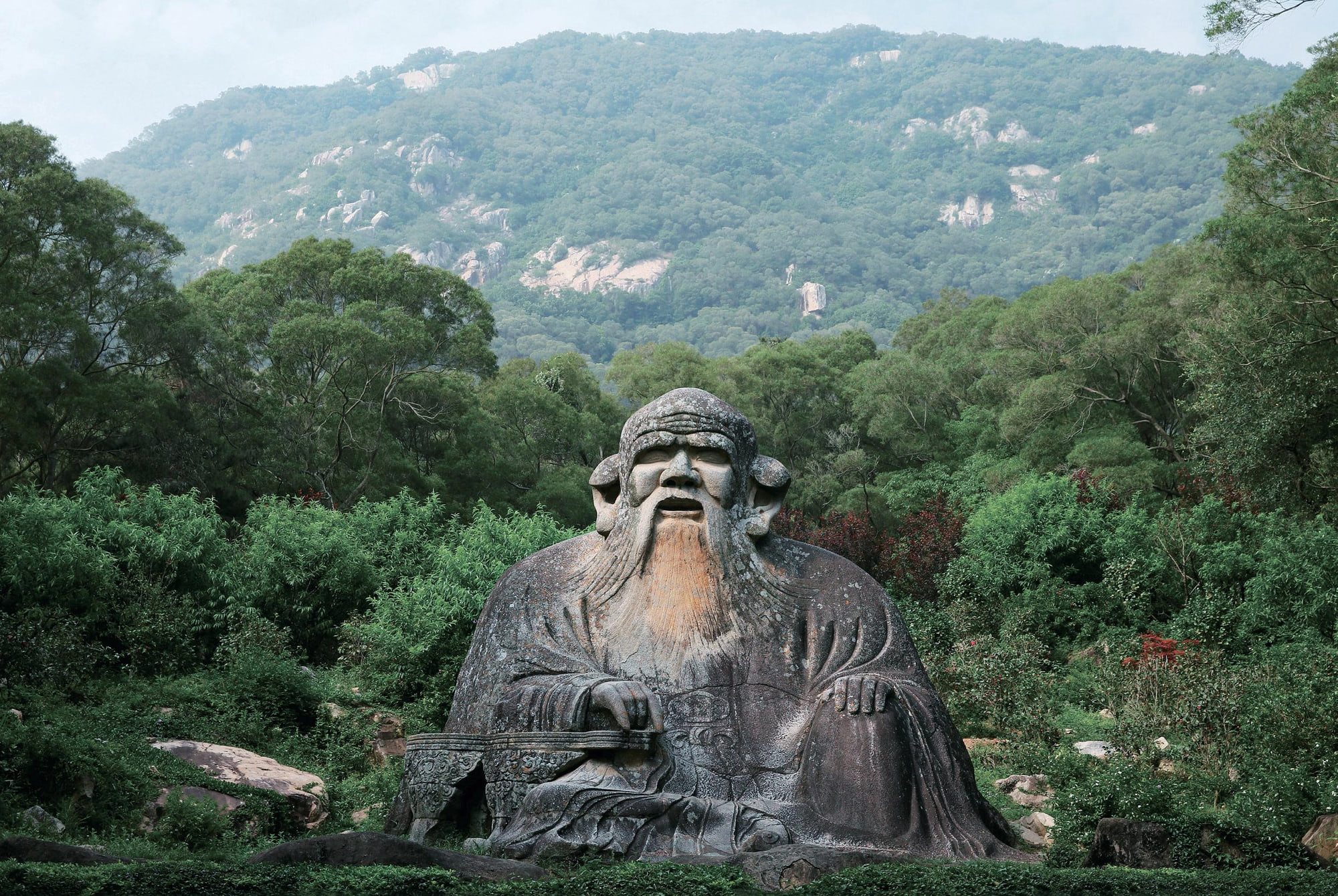
At the southern foot of Qingyuan Mountain, a large natural granite boulder was shaped into a seated image of Lao Tze, or Laozi, the figure traditionally associated with the Daodejing and the foundations of Daoist thought. Quanzhou's official heritage interpretation identifies it as China's largest surviving Daoist stone sculpture.
The statue is immediately memorable, but its role in the World Heritage property needs explanation. Quanzhou's prosperity attracted Buddhist, Muslim, Manichaean and other communities from across trading networks. At the same time, Confucian and Daoist traditions remained central to local cultural and political life. Lao Tze represents that native intellectual foundation within, not outside, the international port.
The sculpture is also inseparable from its landscape. It is not an image placed in a grand enclosed hall. Robes, body and seat emerge from the boulder, with mountain vegetation and open air around it. The restrained carving turns natural form into philosophical presence.