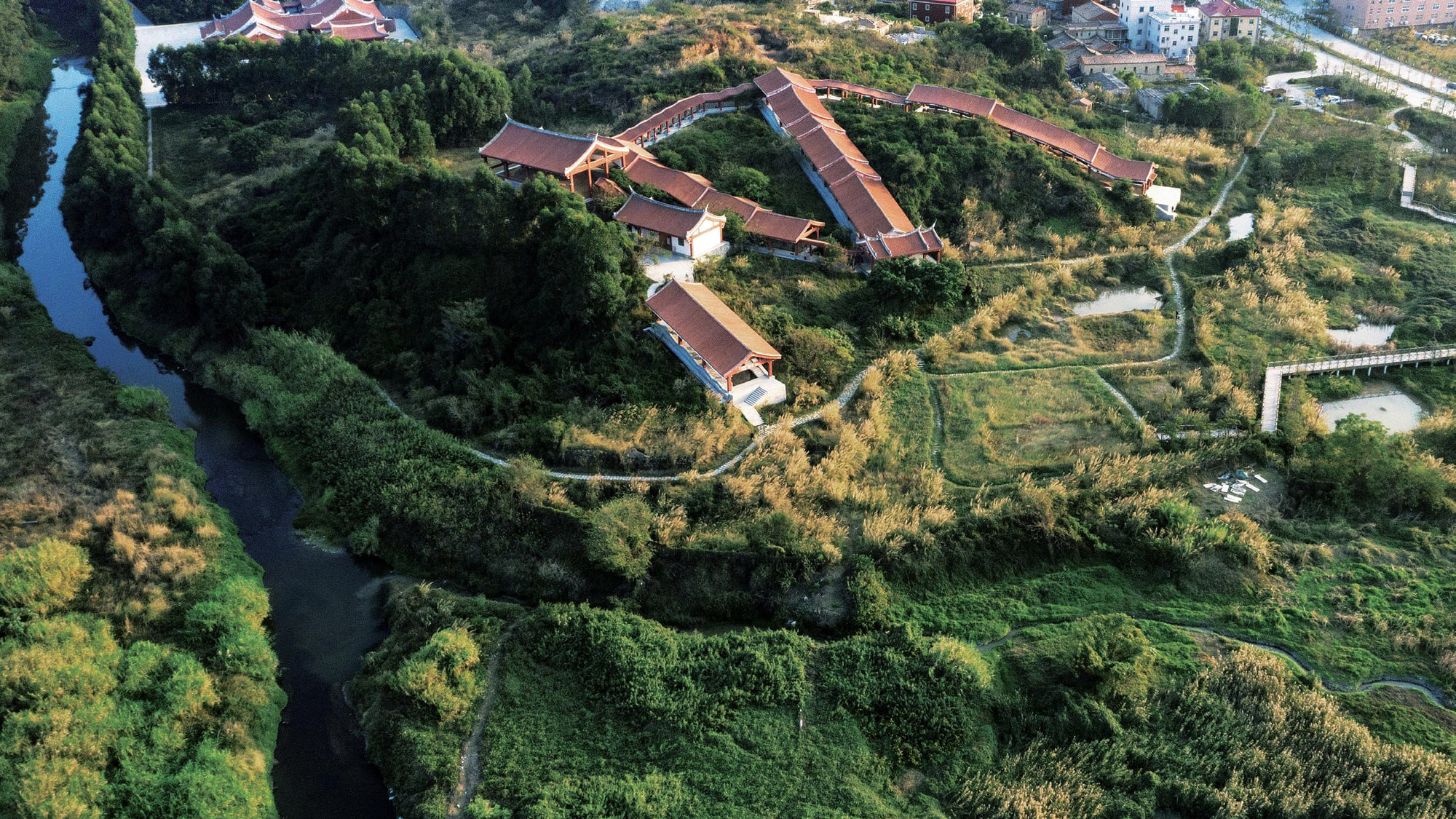
Aerial view of the archaeological landscape at the Cizao kiln site

Ceramic production · Jinjiang

Sites of Cizao Kilns

Kiln waste, dragon kilns and ordinary jars reveal the mass production that kept Quanzhou's maritime trade supplied.

Chinese map name
磁灶窑址 金交椅山 Cizao Kilns
Role in the port
Export-oriented ceramic production
Historic period
Peak production from the 10th to 13th centuries
Time on site
Allow 1–1.5 hours on site

磁灶窑址(金交椅山窑址)

What did a global port manufacture for customers it would never meet?

Cizao lies about 16 kilometres southwest of Quanzhou at the foot of Zimao Mountain, where clay, fuel and creek routes supported a dense ceramic industry. Archaeologists have identified 26 kiln sites from different periods; 12 date to the Song–Yuan era.

At Jinjiaoyi Hill, excavations in 2002 and 2003 revealed four dragon kilns and a workshop. The wares were often celadon or brownish-black glazed and included jars, bottles, storage vessels, powder boxes, bowls, plates, lamps and kendi. Their everyday character is important: maritime commerce depended on large volumes of useful goods as well as luxury objects.

Cizao products have been found across East, Southeast and South Asia and East Africa, and in shipwrecks near Korea, Indonesia and the Philippines. Distribution alone does not identify every vessel securely, but kiln waste, fabric, glaze, form and scientific analysis allow archaeologists to connect production debris here with objects found overseas.
On site

What to look for

The site becomes more legible when you know which physical clues carry its larger story.

Start with the whole setting, then move closer. Architecture, archaeology and landscape often reveal different parts of the same argument.

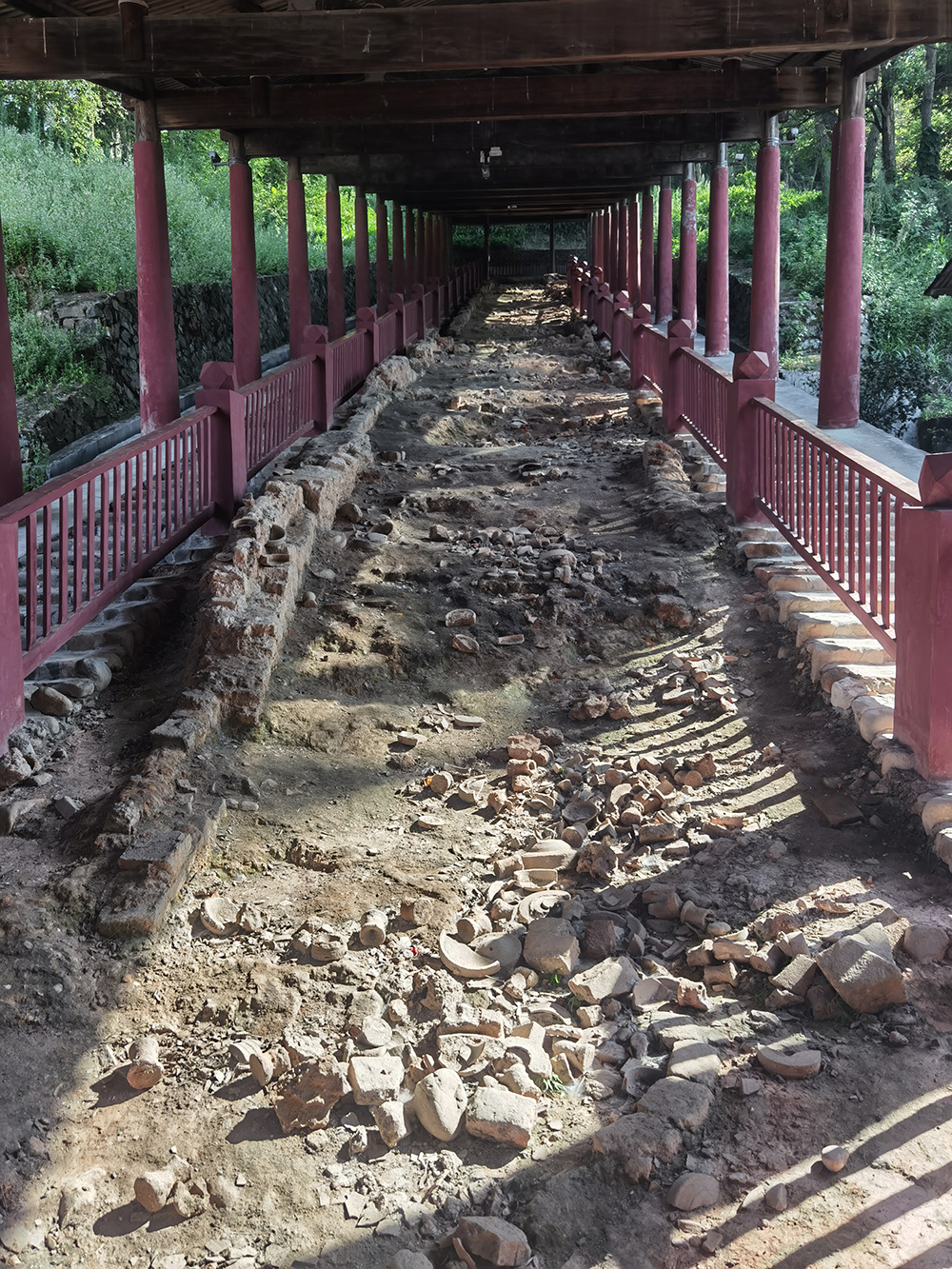
A protected historic kiln bed with dense ceramic fragments in Quanzhou's production hinterland

01

The long slope of a dragon kiln

Dragon kilns climbed a hillside so heat could move through successive firing zones. Follow the structure lengthwise rather than reading it as a single chamber.

02

Wasters and kiln furniture

Misfired fragments, setters and workshop debris are not rubbish in the interpretive sense. They identify what was made, how it was stacked and where production failed.

03

Containers made for movement

Jars, bottles and kendi reveal practical uses and overseas preferences. Ask how form, durability and stackability mattered to maritime transport.

04

Creek, hills and material supply

The industrial landscape included clay, firewood, water and routes to the Jin River. The kiln structure is only one part of that production ecology.

Aerial view of the archaeological landscape at the Cizao kiln site

Read the port system

Export trade began with clay, fuel and repetitive labour

Cizao represents the production layer of Quanzhou's port system. Goods moved from workshops along inland and river routes to docks where merchants assembled cargoes for different markets.

Recent study of the Nanhai I shipwreck found identical ink names on wares associated with both Cizao and Dehua. Researchers interpret these as marks of traders or owners rather than potters, suggesting merchants combined products from several kiln centres before shipment.

See all 22 component sites

Research lens

What scholarship adds to the visit

Cizao shifts attention from imported luxuries to ordinary export production: kilns, workshops and mass-market vessels made global trade possible at scale.

01

Export demand reshaped production

Ho's study describes a ceramic boom across southern Fujian during the Song and Yuan periods. Cizao's everyday jars, bottles, bowls and kendis belong to a production economy responsive to markets beyond China.

Read the source

Ho Chuimei, ‘The Ceramic Boom in Minnan During Song and Yuan Times’

02

Cargo passed through merchant hands

Recent analysis of the Nanhai I cargo found the same ink names on wares associated with both Cizao and Dehua. Researchers interpret them as trader or owner marks, evidence that merchants assembled goods from more than one kiln centre.

Read the source

Xu et al., ‘Micro-provenance analysis of Dehua-style porcelain from the Nanhai I shipwreck’ (Antiquity, 2024)

03

Kiln waste is positive evidence

Pearson, Li and Li show how kiln structures, wasters and distribution finds allow archaeologists to connect inland production with shipwrecks and overseas sites even when finished objects left the region.

Read the source

Richard Pearson, Li Min and Li Guo, ‘Quanzhou Archaeology: A Brief Review’ (2002)

Plan the visit

Make the time on site count

These are planning decisions, not fixed opening-hour claims. Recheck access and transport shortly before travel.

01

Visit for archaeology, not a shopping street

The core experience is excavated production evidence. See a museum ceramic display first if kiln structures and fragments are unfamiliar.

02

Arrange a car from the city

Cizao is outside the old-city circuit. Save 磁灶窑址(金交椅山窑址) and confirm the exact visitor entrance with the driver.

03

Allow for limited English

Download this page and save images of representative wares before travelling. Object names and technical kiln terms may appear only in Chinese on site.

04

Do not remove fragments

Even small sherds belong to a protected archaeological context. Stay on marked paths and leave every fragment in place.

Connect the place

Follow an object from kiln to ship

Combine Cizao with the Maritime Museum or Estuary Docks rather than another distant county site. The route moves from manufacture to cargo handling and overseas discovery.