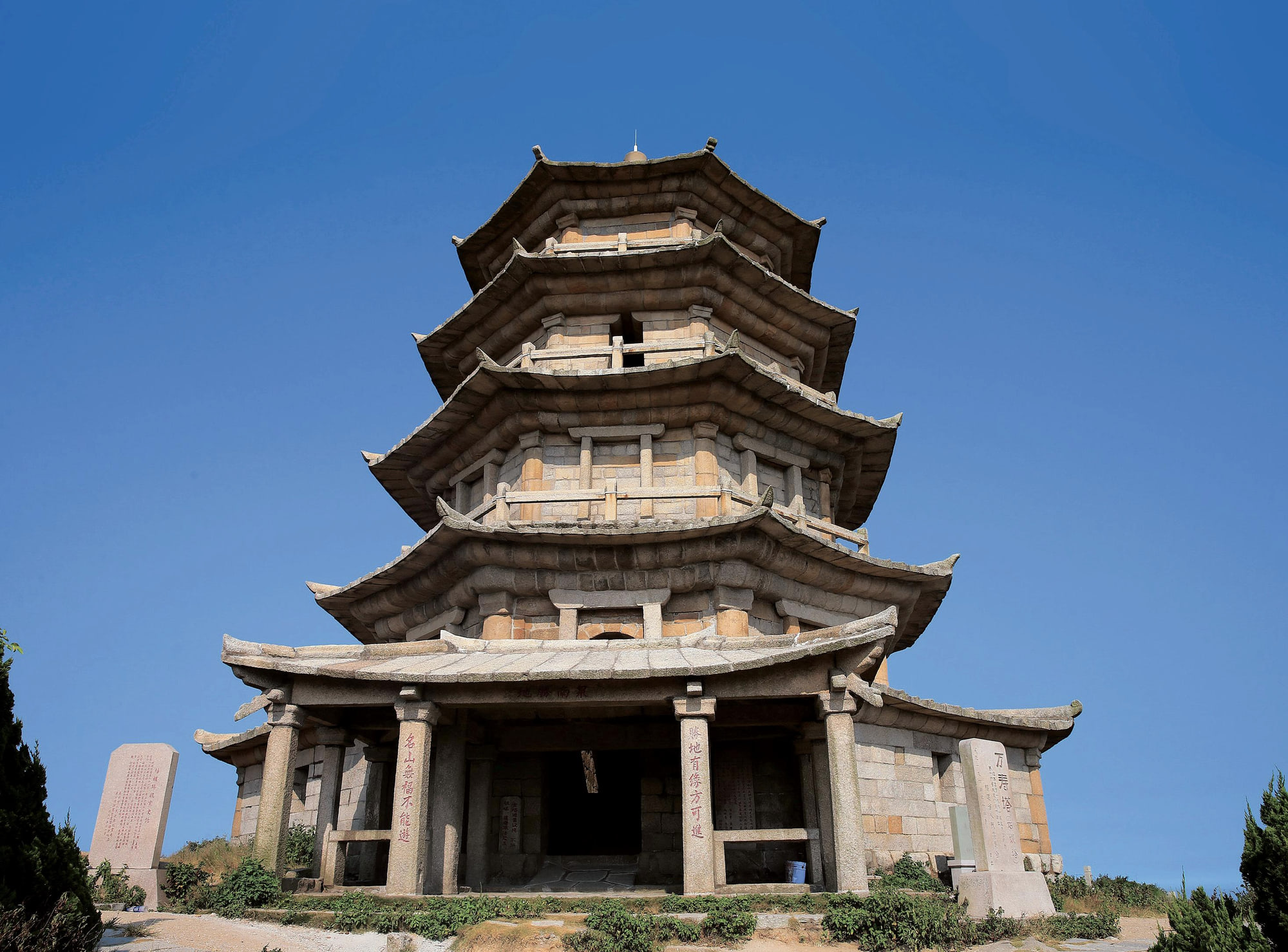
Wanshou Pagoda rising from its stone terrace on the Shishi coast

Navigation landmark · Shishi coast

Wanshou Pagoda

High above Quanzhou Bay, a Southern Song pagoda joined long-distance visibility with protection, waiting and coastal memory.

Chinese map name
万寿塔 姑嫂塔 Wanshou Pagoda
Role in the port
Bay-wide landmark, lookout and protective monument
Historic period
Built during the Southern Song Shaoxing reign, 1131–1162
Time on site
Allow 1–1.5 hours

万寿塔

Why did sailors, families and builders all need a tower above the bay?

Wanshou Pagoda stands on Baogai Hill, about 20 kilometres southeast of central Quanzhou. The hill reaches roughly 210 metres above sea level, the highest point around Quanzhou Bay, while the five-storey octagonal granite pagoda adds another 22 metres of height.

Monk Jieshu built the tower during the Southern Song Shaoxing reign, 1131–1162, when Quanzhou's maritime trade was expanding. Historical texts say ships could be observed from the hill and sailors used the pagoda as a landmark. Geomantic interpretation also treated this area as the bay's ‘water exit,’ which the tower would guard or lock.

Its popular name, the Sisters-in-Law Pagoda, comes from a story of two women watching the sea for a relative who did not return. The legend is not a construction record, but it preserves the emotional geography of a coast shaped by departure, danger and waiting.
On site

What to look for

The site becomes more legible when you know which physical clues carry its larger story.

Start with the whole setting, then move closer. Architecture, archaeology and landscape often reveal different parts of the same argument.

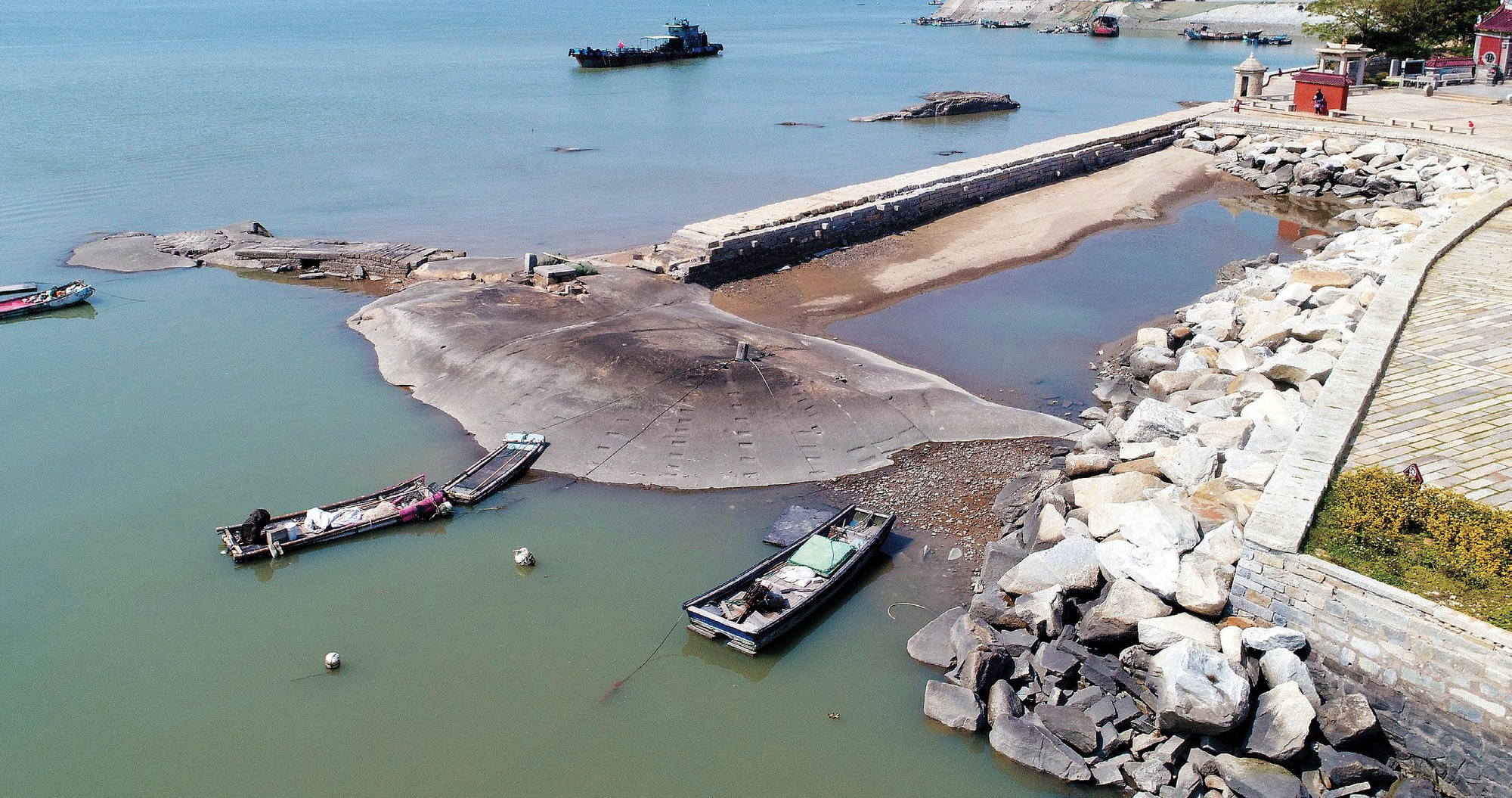
The working coast below the high-ground landmarks of Quanzhou Bay

01

The bay-wide field of view

Orient yourself towards Quanzhou Bay and Shenhu Bay. Height and visibility explain the tower's navigational and lookout roles more clearly than close detail alone.

02

Granite imitating timber

External corridors, brackets and eaves translate a wooden pavilion form into stone across five octagonal storeys.

03

Pass-Locking Pagoda

The alternative name records a geomantic belief about protecting the bay's outlet. Present it as a historical worldview, not a piece of hydraulic engineering.

04

The landscape of waiting

Use the Sisters-in-Law story to consider families left ashore. Folklore can preserve social experience even when it cannot date the monument.

Wanshou Pagoda rising from its stone terrace on the Shishi coast

Read the port system

A coastal landmark served navigation, protection and community memory

Wanshou's visibility made it useful to people on ships and on shore. It marked the broad approach to Quanzhou Bay while expressing hopes for safety in a region whose wealth depended on dangerous voyages.

The monument's meaning therefore lies in several evidence types: surviving Southern Song architecture, historical records of ship observation, geomantic interpretation and later folklore. Keeping them distinct makes the story richer, not weaker.

See all 22 component sites

Research lens

What scholarship adds to the visit

Wanshou Pagoda combines a commanding line of sight, protective belief and local memory at the high ground controlling the outer approach to Quanzhou Bay.

01

Height made the monument operationally visible

Built on Baogai Hill during the Southern Song, the pagoda could be seen from the bay and appears in records as a point from which ships were observed. Its location made religious and navigational meanings overlap.

Read the source

Quanzhou World Heritage nomination dossier (2020)

02

Folklore records the emotional coast

The ‘Sisters-in-Law Pagoda’ story is not a construction record, but it preserves the social experience of waiting, danger and separation in a seafaring community. Scholarship benefits from keeping folklore and architectural evidence in dialogue without confusing them.

Read the source

‘Local community narratives on world cultural heritage: a case study of Quanzhou’ (Built Heritage, 2025)

03

The wider bay is part of authenticity

ICOMOS treats the setting and sightlines of coastal pagodas as essential attributes. The view is not incidental scenery: it explains why the monument was built here.

Read the source

ICOMOS evaluation of the revised Quanzhou nomination (2021)

Plan the visit

Make the time on site count

These are planning decisions, not fixed opening-hour claims. Recheck access and transport shortly before travel.

01

Choose clear weather

The view is central to the site. Haze, rain and strong coastal wind can reduce visibility or affect access to exposed parts of the hill.

02

Allow for the hill approach

Wear stable shoes and expect slopes or steps. Exact vehicle access and walking distance can change with local traffic management.

03

Use both Chinese names

Save 万寿塔 and the widely used 姑嫂塔. The second name may produce more useful local map results.

04

Keep the legend labelled

Retell the Sisters-in-Law story as folklore rather than proof of who built the pagoda or why. The documented Southern Song construction has its own source base.

Connect the place

Make Wanshou the high point of a Shishi coast day

Combine the hill with Liusheng Pagoda and Shihu Dock when transport and daylight allow. The route moves from a bay-wide lookout to a shipping-channel marker and working landing.